Work Hours
Monday to Friday: 10.00 - 19.00



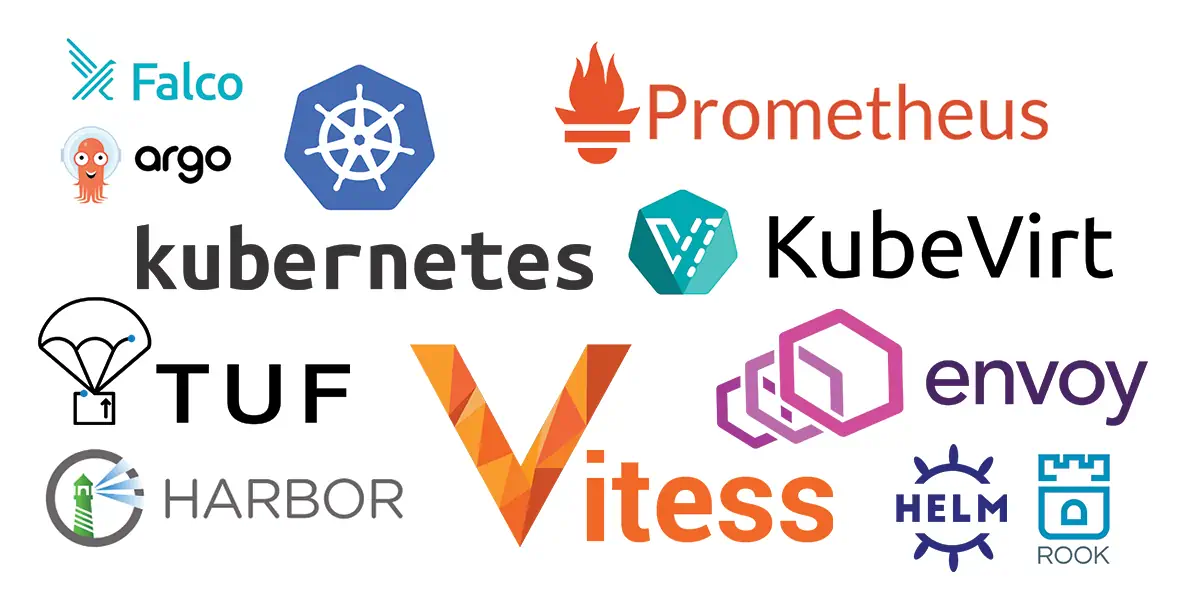

The Cloud Native Computing Foundation (CNCF) is at the forefront of defining modern cloud-native technologies. In 2023, several CNCF cloud native projects have distinguished themselves through innovation, utility, and widespread adoption.
In this guide, we’ll explore the top 10 CNCF cloud native projects and understand their applications in today’s ecosystem. Moreover, these tools are essential for organisations looking to optimise their cloud infrastructure and reduce costs.
Why CNCF cloud native projects matter
Before diving into the list, it’s important to understand why these projects are critical. Cloud-native technologies enable organizations to build scalable, resilient applications. Furthermore, they provide the foundation for modern DevOps practices and efficient resource management.
1. Kubernetes: The container orchestration powerhouse
Kubernetes is more than a buzzword; it’s the backbone of container orchestration. Specifically, it automates the deployment, scaling, and management of containerised applications. Consequently, it has revolutionised how applications are deployed and scaled in cloud environments.
General usage:
- Automating container management across clusters
- Simplifying scalability of applications
- Enabling a microservices architecture
Additionally, Kubernetes has become the industry standard for container orchestration. Organizations worldwide rely on it to manage their cloud-native infrastructure.
2. Prometheus: Mastering monitoring and observability
Prometheus has become synonymous with monitoring in CNCF cloud native projects. It provides a robust toolkit for monitoring and alerting. Moreover, it’s critical for performance optimization and troubleshooting.
General usage:
- Real-time monitoring of cloud-native applications
- Setting up alerts for system anomalies
- Gathering metrics for system analysis
Furthermore, Prometheus integrates seamlessly with other CNCF projects, creating a comprehensive observability stack.
3. Envoy: The edge and service proxy
Envoy excels as a high-performance proxy. Specifically, it handles edge routing and service-to-service communication within microservices architectures.
General usage:
- Managing traffic between services (service mesh)
- Handling edge routing for incoming and outgoing traffic
- Load balancing and traffic management
In addition, Envoy forms the data plane for many service mesh implementations, including Istio.
4. Fluentd: Unifying data logging
Fluentd addresses the challenge of logging in distributed systems. It provides a unified layer for data collection and aggregation. Therefore, it’s essential for maintaining visibility across complex infrastructures.
General usage:
- Collecting and aggregating logs from multiple sources
- Streamlining log processing and forwarding
- Integrating with various data outputs and storage solutions
Moreover, Fluentd’s plugin ecosystem makes it adaptable to virtually any logging scenario.
5. Helm: Kubernetes’ package manager
Helm simplifies Kubernetes application management significantly. Its charts help manage Kubernetes packages. Consequently, it makes defining, installing, and upgrading complex applications much easier.
General usage:
- Managing Kubernetes applications through reusable charts
- Simplifying deployment of services and applications
- Version controlling your infrastructure configurations
Additionally, Helm has become the de facto standard for packaging Kubernetes applications.
6. Istio: The service mesh leader
Istio is a service mesh that provides secure, manageable network communication between microservices. As a result, it’s one of the most popular CNCF cloud native projects for enterprise environments.
General usage:
- Managing microservices traffic and policies
- Enabling secure service-to-service communication
- Providing observability and traffic control
Furthermore, Istio integrates with Prometheus and other monitoring tools for comprehensive visibility.
7. etcd: Key-value store for critical data
etcd is a distributed key-value store. It provides a reliable way to store data across a cluster of machines. Moreover, it’s the backbone of Kubernetes’ data storage.
General usage:
- Storing crucial metadata for distributed systems
- Providing coordination and state management
- Ensuring consistency across clustered applications
In addition, etcd’s strong consistency guarantees make it ideal for critical configuration data.
8. Linkerd: The lightweight service mesh
Linkerd is a service mesh solution focusing on simplicity and ease of use. Specifically, it offers observability, reliability, and security without unnecessary complexity.
General usage:
- Simplifying microservices communication
- Providing real-time diagnostics and monitoring
- Implementing security policies with minimal overhead
Additionally, Linkerd is known for its low resource footprint compared to other service mesh solutions.
9. Harbor: Secure container registry
Harbor is an open-source container registry that secures images with policies and role-based access control. Therefore, it’s essential for organisations with strict security requirements.
General usage:
- Storing, signing, and scanning container images
- Implementing image replication across registries
- Vulnerability scanning and compliance enforcement
Moreover, Harbor integrates seamlessly with CI/CD pipelines for automated security scanning.
10. Rook: Cloud-native storage orchestration
Rook turns distributed storage systems into self-managing, self-scaling, and self-healing storage services. Specifically, it brings file, block, and object storage into the Kubernetes cluster.
General usage:
- Providing scalable and redundant storage options for Kubernetes
- Automating storage management within cloud-native environments
- Supporting multiple storage providers (Ceph, NFS, etc.)
Furthermore, Rook eliminates the complexity of managing storage infrastructure manually.
Implementing CNCF cloud native projects in your infrastructure
These top 10 CNCF cloud native projects represent the diversity and dynamism of the cloud-native landscape. From Kubernetes’ container orchestration to Rook’s innovative storage solutions, these projects are fundamentally transforming how organisations deploy, manage, and scale applications.
Getting started with CNCF projects
When implementing these tools, consider starting with the foundational projects first. For example, begin with Kubernetes and gradually add monitoring (Prometheus), logging (Fluentd), and service mesh capabilities (Istio or Linkerd).
Additionally, proper implementation of these CNCF cloud native projects can significantly reduce your cloud costs while improving reliability and scalability.
Next steps: Optimizing your cloud-native infrastructure
Each CNCF cloud native project brings unique strengths to the table. Collectively, they drive the cloud-native movement forward. However, managing these tools requires expertise and ongoing optimisation.
If you’re looking to implement or optimise these CNCF cloud native projects in your infrastructure, consider working with experts who understand the complete ecosystem. Learn more about our CloudOps services and how we help organisations leverage these powerful tools effectively.